Vikas Mathematics Practical Book Std 9: The Complete Study Guide Every Class 9 Student Needs
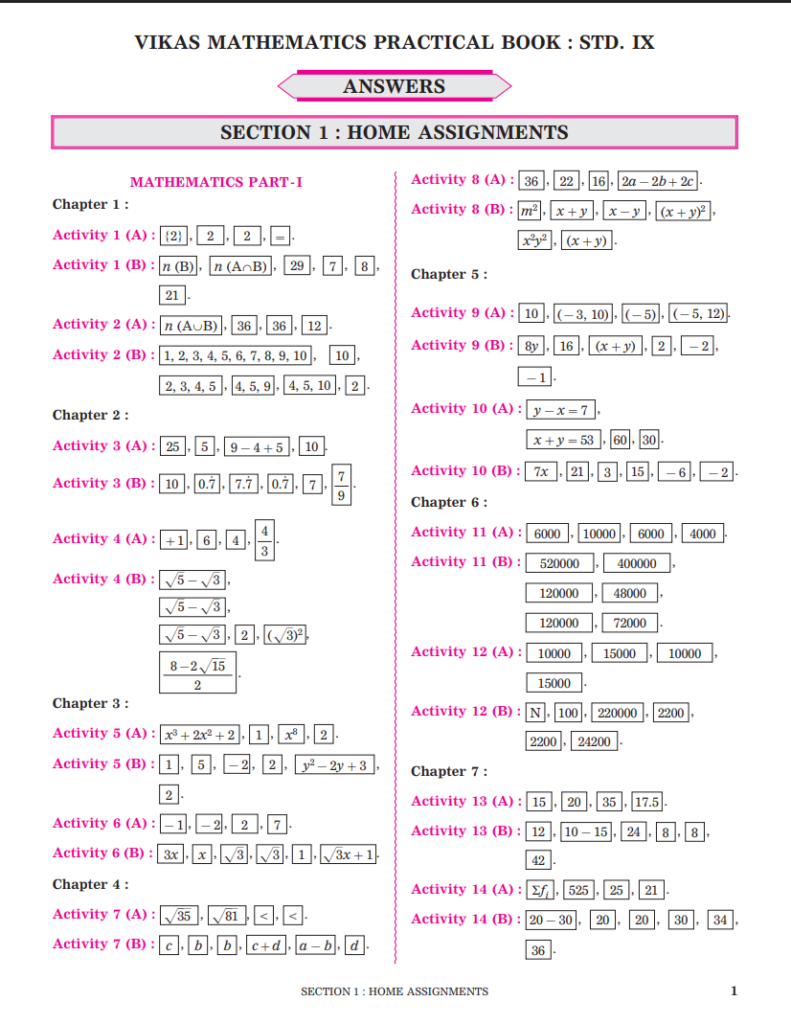
If you’ve just picked up the Vikas Mathematics Practical Book Std 9 and you’re staring at it wondering where to even begin, you’re not alone. Every year, thousands of Class 9 students across Maharashtra open this book for the first time and feel a little lost — not because it’s badly written, but because nobody actually sits them down and explains how to use it properly. Most students end up copying answers the night before submission, which honestly defeats the entire point of a practical journal.
So let’s fix that. In this guide, I’m going to walk you through what this book actually is, why it matters more than most students realise, how to build a study routine around it, and which other books deserve a spot on your Class 9 desk. Grab a cup of chai, because we’re covering this properly.
What Exactly Is the Vikas Mathematics Practical Book Std 9?
The Vikas Mathematics Practical Book is published by Navneet and is built specifically around the Maharashtra State Board syllabus for Class 9. It comes in two parts — Part I and Part II — matching the two halves of the Maharashtra Board maths curriculum (broadly, Algebra in Part I and Geometry in Part II, along with some allied topics).
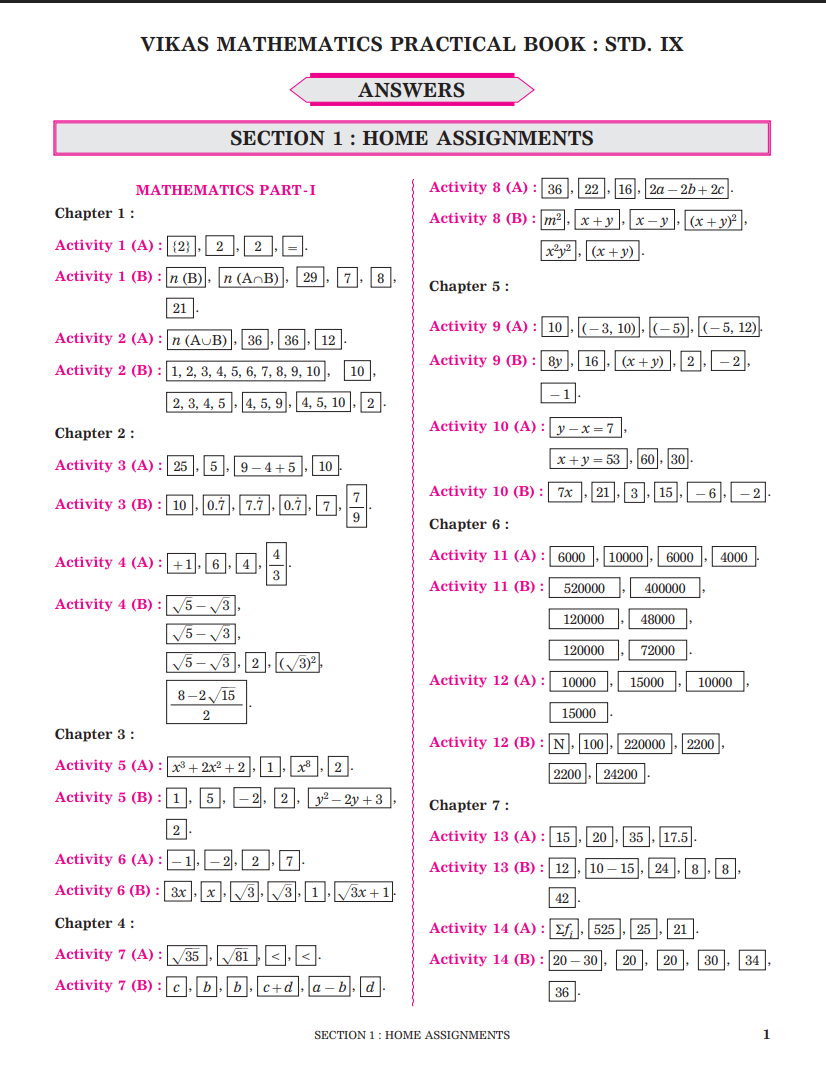
What makes it different from your regular textbook is the word “practical.” This isn’t a book of theory or exercises you solve for homework marks. It’s a journal-style workbook where you complete “specimen practicals” — structured activities tied directly to concepts from your Std 9 maths textbook — and submit them for internal assessment. Each activity typically includes step-by-step guidance, clean diagrams, and space for you to fill in your own work and answers, which is exactly why schools ask for it alongside the main textbook.
It’s a slim, affordable book — usually priced under a hundred rupees — but its impact on your internal marks is anything but small.
Why This Book Is Important for Class 9 Students
Here’s the thing most students don’t realise until it’s too late: your final maths grade in the Maharashtra Board isn’t decided by the written exam alone. Practical work, journal submissions, and internal assessments carry real weight. Skipping or rushing this book doesn’t just cost you marks on submission day — it costs you understanding you’ll desperately need in Class 10, when the same concepts return in a harder, faster-paced format.
A few concrete reasons this book deserves your attention:
- It bridges theory and application. Reading a geometry proof in your textbook is one thing; actually constructing the figure with a compass and ruler while filling in the practical steps is what makes the concept stick.
- It’s a low-stress way to build exam temperament. Working through structured activities, one at a time, teaches you to approach problems methodically — a habit that pays off massively in board exams later.
- Schools grade it, and colleges (eventually) look at consistent academic records. A neatly maintained, honestly completed journal reflects discipline, and teachers notice.
- It doubles as revision material. Come exam season, flipping back through your completed practicals is often faster and more useful than re-reading the whole textbook chapter.
In short: this isn’t busywork. It’s one of the most efficient tools you have for actually understanding Class 9 maths rather than just memorising it.
How to Study for Class 9: A Full Guide
Class 9 is a strange year academically. It doesn’t have the same do-or-die pressure as Class 10, which is exactly why so many students coast through it — and then regret it when Class 10 hits and the foundations aren’t solid. Treat Class 9 as the year you build the habits that’ll carry you through board exams.
Here’s a full approach that works, broken into manageable pieces.
1. Understand before you memorise
Especially in maths, don’t jump straight to solving problems. Read the concept, understand why a formula works, and only then start practising. The Vikas practical book is perfect for this because it forces you to work through the logic activity by activity, instead of jumping straight to answers.
2. Little and often beats last-minute cramming
Thirty focused minutes a day on maths practicals will get you further than a panicked three-hour session the night before submission. Consistency is what actually builds retention.
3. Don’t skip diagrams and constructions
In geometry practicals, a sloppy diagram often means a wrong answer even if your logic is fine. Use a proper geometry box, take your time, and redo the construction if it looks off. Examiners (and your future self during revision) will thank you.
4. Mix subjects in your daily study
Don’t spend an entire evening only on maths. Your brain retains information better when you rotate subjects — maths, then a language, then science — rather than grinding one subject for hours.
5. Use past activities as a self-test
Once you’ve completed a set of practicals, cover your answers and try redoing two or three activities from memory. If you can, you’ve actually learned the concept. If you can’t, that’s your revision list.
A Sample Weekly Study Timetable for Class 9
Timetables only work if they’re realistic, so here’s one built around actual school hours, homework, and a bit of downtime — because burnout helps nobody.
| Day | 5:00–6:00 PM | 6:00–7:00 PM | 7:30–8:30 PM | 8:30–9:15 PM |
| Monday | Maths (textbook concepts) | Science | School homework | Revision (quick recap) |
| Tuesday | Vikas Practical Book (Part I) | English/Language | School homework | Free time |
| Wednesday | Maths (textbook concepts) | Social Science | School homework | Revision |
| Thursday | Vikas Practical Book (Part II) | Science | School homework | Free time |
| Friday | Weak-topic catch-up | Language | Light homework | Free time/hobby |
| Saturday | Full practicals session (2 activities) | ___ | ___ | Revision of the week |
| Sunday | Rest, light revision only | ___ | ___ | Plan next week |
A few notes on using this table sensibly:
- Adjust the time slots to fit your own school and tuition schedule — the structure matters more than the exact hours.
- Saturdays are ideal for practical book work since you’re not rushing between subjects.
- Keep Sunday genuinely light. Overloading every single day is how students burn out by October.
- If an exam is approaching, shift the “free time” slots to focused revision, but don’t cut sleep — tired brains don’t retain information well, no matter how many hours you put in.
What to Focus On in Class 9
If you’re wondering where to put your energy, prioritise like this:
- Maths fundamentals — Class 9 algebra and geometry directly set up everything you’ll face in Class 10 board exams. Don’t let gaps form here.
- Science concepts, not just definitions — understand the “why,” since board exams increasingly test application over rote recall.
- Language skills — grammar and writing skills built now save you enormous stress in Class 10’s language papers.
- Consistent journal and practical work — across subjects, not just maths, since these contribute to internal assessment.
- Time management as a skill in itself — Class 9 is the ideal, lower-stakes year to practise it before Class 10 raises the stakes.
Best Books for Class 9 Students (Maharashtra State Board)
Beyond the Vikas Mathematics Practical Book, here’s a well-rounded shelf worth building, based on what’s widely used and recommended for Maharashtra Board Class 9 students:
- Vikas Mathematics Practical Book (Part I & II), Std 9 — for the practical journal work covered above.
- Navneet or Vikas Digest/Guide for Class 9 — useful for solved examples and extra practice questions aligned with the state board textbook.
- Vikas Smart Workbook series (Maths, English, History & Political Science, etc.) — good for chapter-wise practice and quick revision across subjects.
- Science and Technology Journal, Std 9 — the science equivalent of the maths practical book, essential for lab-based internal assessment.
- Jeevandeep or Chetana Grammar and Writing Skills workbooks (for English, Hindi, or Marathi as applicable) — strong for building language fundamentals early.
- Your official Maharashtra State Board textbooks — always the primary source; every guide and workbook above is meant to supplement these, not replace them.
If you’re aiming for entrance exams later (NTSE, MTSE, or engineering/medical foundation courses), consider adding a foundation-level reference book too, but don’t let extra books distract from mastering the core state board syllabus first — that’s still where most of your marks come from.
Final Thoughts
The Vikas Mathematics Practical Book Std 9 isn’t just another item on your school booklist — used properly, it’s one of the most practical (pun intended) tools for actually understanding Class 9 maths instead of just surviving it. Pair it with a realistic timetable, a bit of daily consistency, and the right supporting books, and Class 9 stops feeling like a chore and starts feeling like solid preparation for everything that comes after.
Start small. Do one practical properly today rather than five sloppily next week. That’s really the whole secret.
Most schools following the Maharashtra State Board require a practical/journal book for maths as part of internal assessment, and the Vikas edition (published by Navneet) is one of the most commonly prescribed options — but always confirm with your school, since some schools prescribe a different publisher’s version.
Yes, largely. The activities include step-by-step guidance, so a student who has understood the corresponding textbook chapter can usually complete them independently. Ask a teacher or parent for help only when a specific construction or calculation genuinely doesn’t make sense.
Roughly two to three focused hours on academics daily (spread across subjects, including homework) is realistic for most students, alongside school hours — quality and consistency matter far more than raw hours.
Yes, indirectly but significantly. Class 9 builds the conceptual foundation for Class 10, especially in maths and science. Students who treat Class 9 seriously usually find Class 10 far less stressful.