Class 9 Half Yearly Exam 2019: A Complete Study Guide
If you’re a Class 9 student — or a parent trying to help one — searching for “half yearly exam question paper 2019 class 9,” you’ve probably already realized there’s no single official source that hands you everything in one place. Half-yearly exams are conducted by individual schools rather than directly by CBSE, which is exactly why the experience can feel scattered. So let’s go through it properly, step by step, the way an older student or a patient teacher would explain it, rather than just throwing a syllabus at you.
Introduction to the Exam
The half-yearly exam, sometimes called the mid-term or first-term exam depending on your school, usually falls somewhere between September and October in the CBSE academic calendar. It covers roughly the first half of the year’s syllabus and acts as a checkpoint before the much bigger annual exam that comes later. For Class 9 students specifically, this exam matters more than it might seem at first glance because Class 9 is the year that quietly sets the foundation for Class 10 board exams. Concepts in Maths, Science, and Social Science build directly on top of what’s taught this year, so a strong half-yearly performance isn’t just about a good report card — it’s genuinely useful groundwork for the year after.
One thing worth understanding upfront: since half-yearly exams are conducted internally by each school rather than centrally by CBSE, the exact question paper format, weightage, and even the exam dates can differ slightly from one school to another. What follows here reflects the general CBSE pattern that most schools follow closely, but it’s always worth double-checking your own school’s specific paper pattern with your class teacher.
Syllabus of the Exam
Most schools cover close to 50% of the year’s full syllabus by the half-yearly exam, spread across the core subjects. Here’s roughly how it breaks down:
| Subject | What’s Typically Covered |
| English | Beehive/Moments chapters covered so far, grammar, writing skills (letters, diary entries, articles) |
| Hindi | Kshitij/Kritika chapters covered so far, grammar (vyakaran), writing sections |
| Mathematics | Number Systems, Polynomials, Coordinate Geometry, Linear Equations in Two Variables (topics vary by school) |
| Science | Matter in Our Surroundings, Is Matter Around Us Pure, Atoms and Molecules, The Fundamental Unit of Life (varies by school) |
| Social Science | Selected chapters from History, Geography, Political Science, and Economics covered in the first term |
A quick, honest note here — this table is a general guide, not a guarantee. The actual chapters included depend entirely on how far your specific school has progressed in the syllabus by exam time, so always confirm the exact chapter list with your subject teachers rather than assuming.
Marking System
CBSE-affiliated schools generally follow a fairly consistent structure for how these exams are scored, even though the half-yearly itself is school-conducted. Here’s the typical breakdown:
| Component | Marks | Notes |
| Theory Paper | 80 | Divided into MCQs, short-answer, and long-answer sections |
| Internal Assessment | 20 | Periodic tests, notebook submission, subject enrichment activities |
| Total | 100 | Passing generally requires around 33% in each component |
| Question Paper Sections | A, B, C, D (typically) | MCQs (1 mark each), short answer (2–3 marks), long answer (4–5 marks), case-based/source-based questions |
Within the theory paper, questions usually move from simple recall-based MCQs to more analytical, application-based questions as you go further into the paper. Case-based or source-based questions — where you’re given a short passage or data set and asked questions around it — have become increasingly common in CBSE-style papers, so it’s worth practicing that question format specifically rather than assuming straightforward memorization will carry you through.
Why Previous Year Question Papers Are Important
Here’s something students underestimate constantly: solving previous year half-yearly papers teaches you things that reading the textbook simply can’t. It shows you exactly how questions get phrased in an actual exam setting, which is often quite different from how the same concept sits in your NCERT textbook. It also helps you get a feel for time management — sitting through a full theory paper with a clock running is a completely different experience from casually reading chapters at home.
Beyond that, previous papers reveal which topics tend to get repeated attention across years, which helps you figure out where to focus your revision instead of treating every single page with equal urgency. And solving them regularly builds something that’s easy to overlook but genuinely important — exam-day composure. The first time you sit a timed paper shouldn’t be the actual exam itself.
Try to get your hands on at least two or three years of previous half-yearly papers for each subject, solve them under real-time conditions, and then go back and understand every question you got wrong rather than just checking the answer key and moving on.
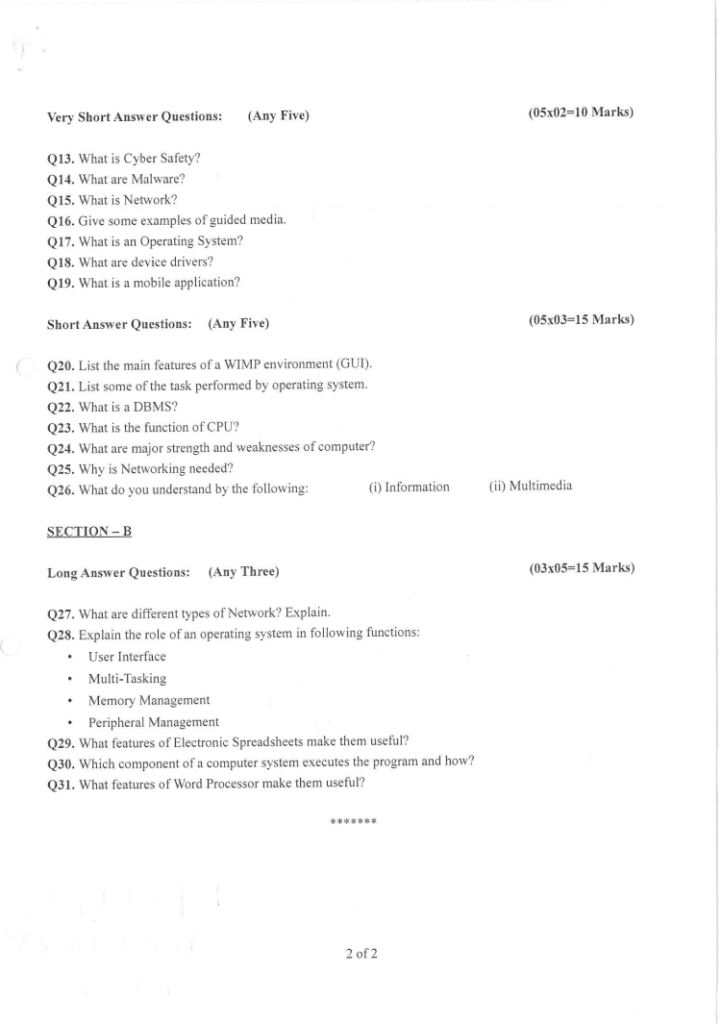
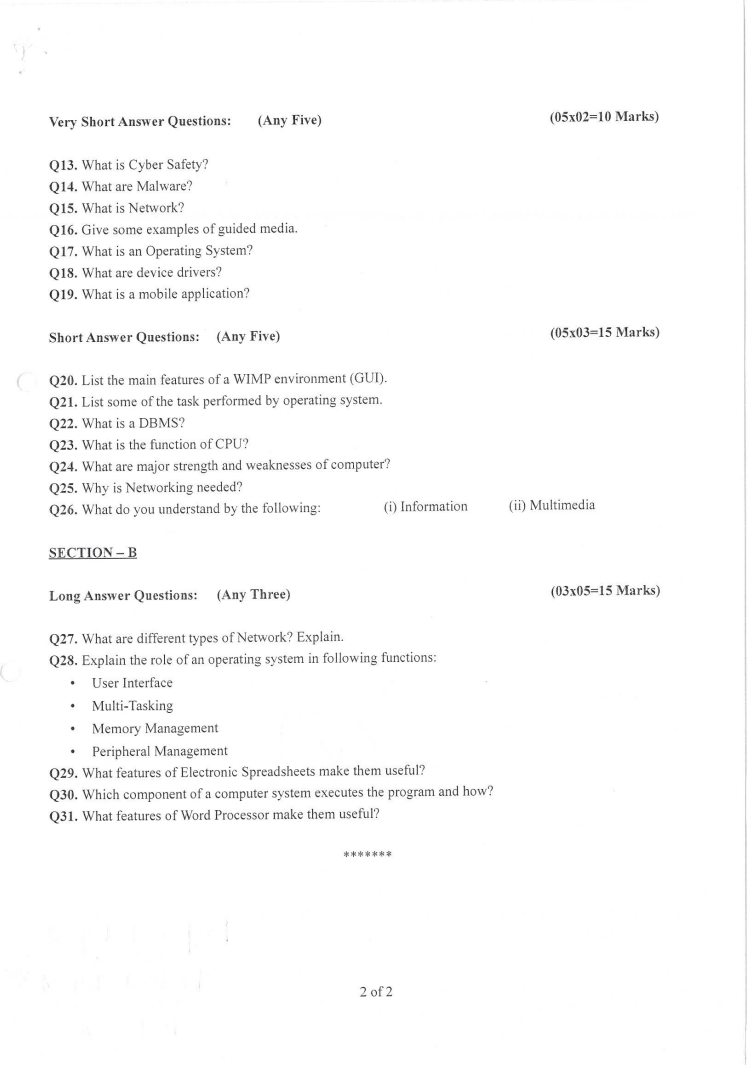
Question Paper 2019-20 (Half Yearly) Classes IX
Best Books for Exam Preparation
There’s a strong temptation to buy every reference book on the shelf, but for Class 9, less really is more if you pick the right ones.
| Book Type | What It’s For | Priority |
| NCERT textbooks (all subjects) | The primary source — almost all exam questions are based directly on these | Non-negotiable, start here |
| NCERT Exemplar | Extra practice questions, slightly tougher than textbook level | High priority for Maths & Science |
| A trusted reference/guide book | Extra explanation, solved examples, and practice questions per subject | Useful, but only one per subject |
| Previous year question paper compilation | Real exam-format practice | Essential, don’t skip this |
| A grammar practice book (English & Hindi) | Focused grammar drilling beyond the textbook | Helpful, especially for language sections |
The NCERT textbook genuinely comes first, every time, for every subject. It’s not optional and it’s not old advice — it’s still where the vast majority of your exam questions originate from. Everything else on this list should feel like it’s supporting the NCERT, not replacing it.
How to Crack This Exam
Cracking a half-yearly exam isn’t about some secret trick — it’s about a few unglamorous habits done consistently. Read every chapter from the NCERT textbook at least twice: once to understand it, and once closer to the exam purely for revision. Make your own short notes as you go, in your own words, rather than relying entirely on a guidebook’s summary — writing something down in your own language helps it stick far better than just reading someone else’s version of it.
Practice numerical problems in Maths and Science daily rather than in occasional bursts, since these subjects reward muscle memory built over repetition. For Social Science and language subjects, focus on understanding concepts rather than pure memorization wherever possible — dates, definitions, and grammar rules stick much better when you understand the logic behind them instead of rote-learning in isolation. And don’t underestimate the value of asking your teacher when something genuinely doesn’t make sense — a five-minute clarification in class can save you hours of confused self-study at home.
Study Timetable
A workable timetable for a Class 9 student needs to balance school hours, homework, and actual revision time — not just squeeze in more hours for the sake of it.
On weekdays, after school and a proper break, aim for about two hours of focused study split across two subjects — say, an hour on Maths or Science, and an hour on Social Science or a language subject, rotating which subjects get priority based on your exam schedule. Keep weekday study sessions realistic; a tired mind doesn’t retain much after the first hour anyway.
Weekends are where the real progress happens. Use Saturday for deeper subject study — working through NCERT Exemplar problems, writing out full answers for Social Science, or practicing grammar sections. Use Sunday, or at least part of it, to solve one full previous year paper under timed conditions, followed by reviewing your mistakes properly. As the exam date gets closer, shift your weekday sessions increasingly toward revision and quick recall rather than learning fresh content, since cramming new topics in the final week tends to do more harm than good.
Final Thoughts
Half-yearly exams can feel like a lot of pressure for something that isn’t even your final board exam, but the habits you build preparing for it matter well beyond this one exam. Reading consistently, practicing previous papers, and asking for help when you’re stuck are exactly the same habits that will carry you through Class 10 boards and beyond. There’s no need to panic if a chapter feels tough right now — that’s normal, and it usually gets clearer with one more careful read-through and some honest practice. Stick to your NCERT textbooks, take your previous papers seriously, keep your timetable realistic enough that you can actually follow it, and trust that steady daily effort adds up far more than the last-minute scramble ever does.