Ascent Entrance Exam Model Paper: A Complete Guide for Students
Introduction
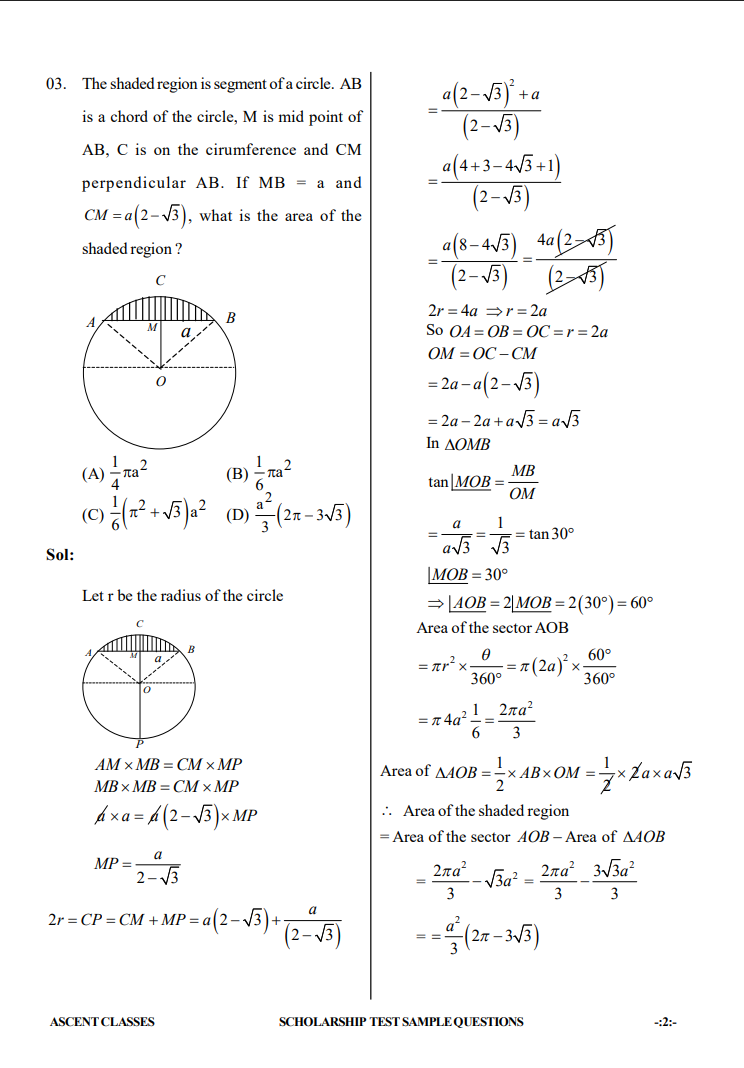
If you’ve typed “Ascent entrance exam model paper” into a search bar at 11 PM with a mix of curiosity and mild panic — welcome, you’re in the right place. Chances are you (or your child) are getting ready to sit for an admission or scholarship test run by an Ascent-branded coaching institute, like Ascent Classes or Ascent Academy, for a spot in their JEE, NEET, or foundation-level science program. These institutes run their own entrance-cum-scholarship tests — often called ASAT or VSAT — to figure out who’s ready for what, and who deserves a fee scholarship along the way.
Here’s the honest bit: different Ascent institutes structure their exams a little differently, so nobody can hand you one universal “correct” pattern. What I can do is walk you through what’s genuinely common across most of them — why the exam exists, what it tests, how model papers actually help (not just “because everyone says so”), and how to build a study plan that doesn’t fall apart by week two. Do double-check the exact pattern and marking scheme with your own institute’s brochure, since small details shift from year to year.
What Exactly Is This Exam?
Strip away the branding, and an Ascent entrance or scholarship exam is really just a screening test — a way for the institute to answer three questions about you before you join:
- Are you ready? This decides admission into a course like IIT-JEE or NEET-UG batches.
- Where do you fit? This sorts students into pace-appropriate groups — foundation, nurture, achiever, or crash-course tracks.
- Do you deserve a discount? Top scorers often walk away with fee concessions, which is why you’ll hear these called “scholarship admission tests.”
Students from Class 6 right through Class 12 sit for versions of this test, and the papers get noticeably tougher as you go up — a Class 7 student isn’t solving the same problems as a Class 12 JEE aspirant, obviously, but the underlying purpose stays the same.
Why Model Papers Actually Matter
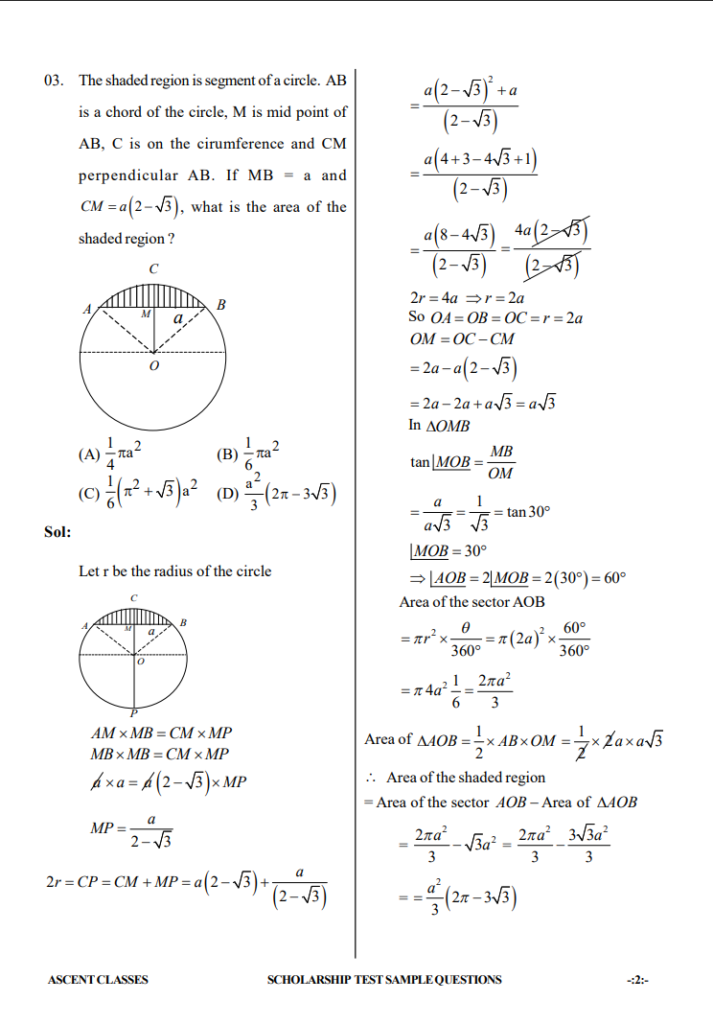
A model paper is built to feel like the real thing — same sections, similar difficulty, same time pressure. It’s easy to treat these as optional extra homework, but they do something your textbook simply can’t:
- They kill the fear of the unknown. Most exam anxiety comes from not knowing what to expect. Solve two or three model papers, and the “mystery” of the actual exam mostly evaporates.
- They show you the truth about your weak spots. You might feel solid on a chapter until a timed paper proves otherwise. That discomfort is uncomfortable, sure, but it’s also exactly the information you need.
- They teach you to manage the clock. A lot of these exams reward students who know when to walk away from a stubborn question and come back later — and that instinct only develops through practice, not theory.
- They quietly fix careless mistakes. Misreading a question, flipping a sign, forgetting a unit — these small slip-ups cost real marks, and repeated practice is often the only thing that trains them out of you.
Who Should Focus on This Exam, and How
Not every student needs to prep the same way — where you are right now should shape what you do next.
| Class Level | What the Exam Checks | Where to Focus |
| Class 6–8 (Foundation) | Basic mathematical reasoning, mental ability, and general science from the school curriculum | Build strong fundamentals: NCERT-level concepts, reasoning puzzles, arithmetic speed |
| Class 9–10 | Physics, Chemistry, Maths (or Biology for NEET track); application over recall | Build problem-solving stamina with slightly harder-than-school-level questions |
| Class 11–12 (JEE/NEET) | Full competitive-exam pattern: MCQs, negative marking, JEE Main/Advanced or NEET-UG syllabus | Weekly model papers as a core part of routine, not a last-minute add-on |
If you’re younger, resist the urge to rush toward “advanced” material — a shaky foundation shows up painfully later. If you’re in the JEE/NEET stretch, model papers stop being optional homework and become the backbone of your week.
Building a Subject-Wise Study Strategy
There’s no single trick that works across every subject — each one rewards a slightly different kind of effort.
| Subject | Key Focus Areas | How to Study |
| Mathematics | Algebra, geometry, arithmetic (junior); trigonometry, calculus, coordinate geometry (senior) | Practice both direct-formula and multi-step problems for speed + accuracy |
| Physics | Application-based numericals, not isolated facts | Derive formulas yourself instead of memorizing, so you can adapt to twisted questions |
| Chemistry | Physical, Organic, Inorganic — each needs a different approach | Physical: numerical practice; Organic: understand mechanisms; Inorganic: consistent revision |
| Biology (NEET track) | NCERT-based factual recall and application | Re-read NCERT biology multiple times; most questions trace back to it |
| Mental Ability / Reasoning (junior students) | Pattern recognition, logical sequences, puzzles | Regular varied practice — this skill builds over time, not through cramming |
A quiet truth here: most students already know which subject they’re avoiding. If Chemistry gives you a knot in your stomach, that’s usually your answer for where the next hour of study should go.
How to Use Model Papers Effectively
Solving a model paper is only half the job — what you do right after matters just as much, and it’s the step most students skip.
A quiet truth here: most students already know which subject they’re avoiding. If Chemistry gives you a knot in your stomach, that’s usually your answer for where the next hour of study should go.
How to Use Model Papers Effectively
Solving a model paper is only half the job — what you do right after matters just as much, and it’s the step most students skip.
| Step | Action | Why It Helps |
| 1 | Simulate real exam conditions (quiet space, strict timer, no notes) | Builds comfort with actual exam pressure |
| 2 | Review every mistake, not just wrong answers | Even lucky guesses hide gaps in understanding |
| 3 | Track recurring weak topics across papers | Turns random practice into targeted revision |
| 4 | Attempt papers in increasing difficulty | Builds confidence first, then exam-level toughness |
| 5 | Revisit the same paper after 2–3 weeks | Checks if a concept truly stuck, or was just memorized short-term |
That last step surprises people, but it’s often the most honest test of whether you actually learned something — or just remembered the answer key.
Common Mistakes Students Make
Nearly every student makes at least one of these, so don’t beat yourself up if you spot a familiar habit here — just start fixing it today.
| Mistake | Why It Hurts | Fix |
| Focusing only on “favorite” subjects | Weak subjects drag down the overall score | Give proportional time to every subject, not just strong ones |
| Solving papers without timing | Creates a false sense of preparedness | Always use a strict timer, matching real exam duration |
| Skipping the review step | You repeat the same mistakes in the next paper | Review every question, right or wrong, before moving on |
| Relying only on memorized formulas | Falls apart on slightly modified questions | Understand the “why” behind each formula, not just the “what” |
Final Weeks Before the Exam
In the last two or three weeks, stop chasing new topics — it’s tempting, but it rarely pays off. Instead, revisit your formula sheets, redo the questions you’d flagged as “weak,” and take one full-length model paper every few days under real timing. And here’s the part students underestimate: sleep, food, and a calm head matter more in this stretch than one extra chapter ever will. A rested mind that knows 80% cold will usually beat an exhausted one chasing the last 20%.
Conclusion
Whether you’re a Class 6 student taking your very first shot at a competitive exam, or a Class 12 student in the home stretch before JEE or NEET, Ascent entrance exam model papers are genuinely one of the most useful tools you have. They don’t just check what you know — they train you to think clearly under pressure, manage a ticking clock, and shake off a bad question instead of spiraling over it. Practice them consistently, review them honestly, and that unfamiliar exam-day feeling will start to feel a lot more like a Tuesday afternoon. And since patterns can shift between institutes and years, take one last look at your own coaching center’s latest brochure before you finalize your plan.