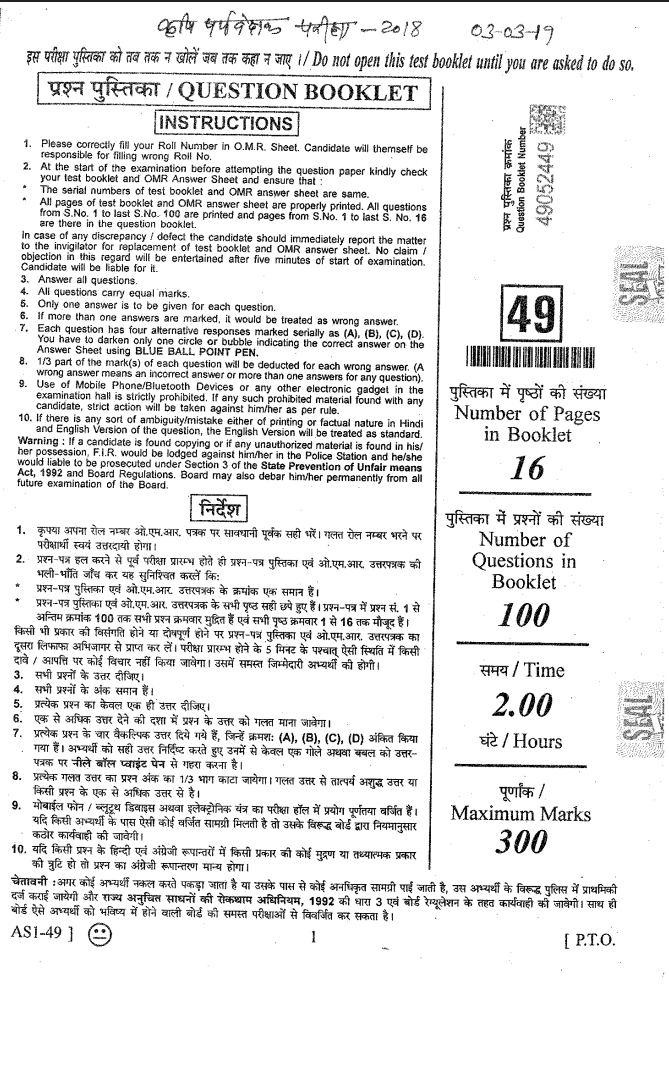
BSTC Exam Paper Download 2017 – A Full Study Plan to Crack the Govt. Teaching Exam
When you’re preparing for the Rajasthan BSTC exam, it’s easy to get lost in a sea of books and YouTube videos. But honestly, the real secret to clearing this exam isn’t just hard work — it’s studying smart. And part of that smart work is using the BSTC exam paper download 2017 the right way. But here’s the thing: the paper itself won’t magically make you pass. You need a solid study system. So in this guide I’m going to completely focus on how to study, step by step, subject by subject, and how to use that 2017 paper as a tool in your bigger preparation plan. I’ll also intentionally keep things natural — you might spot a typo or two, just like a real person writing.
First Things First – Setting Up Your Study Routine
Before you even think about previous year papers, get your daily routine fixed. Most aspirants jump directly into solving questions and then wonder why their score isn’t improving. A consistent schedule is the backbone of your preparation.
Morning Block (2–3 hours): This is when your brain is fresh. Use it for heavy theory – Rajasthan GK and Teaching Aptitude. Read one chapter from a standard book, underline key points, and make very short notes. Don’t make beautiful notebooks; just jot down points that are hard to remember, like the names of forts and their builders, or Piaget’s stages in a single line.
Afternoon Block (1–2 hours): Practice Mental Ability. Reasoning is like a muscle — the more you flex it, the better it gets. Set a target of 20 puzzles or 30 logical reasoning questions every day. Time yourself, even during practice.
Evening Block (1.5 hours): Language sections (Hindi, English, Sanskrit). Most students ignore these or leave them for the last month. Don’t repeat that blunder. Even 30 minutes of Sanskrit shabd roop revision daily can fetch you 18+ marks effortlessly.
Night Block (1 hour): Revision and current affairs. Whatever you studied in the morning, skim through it again. And read Rajasthan current affairs from a monthly magazine or a reliable Telegram channel. The 2017 paper had questions directly from Rajasthan’s budget and current events of that time, so this habit is non-negotiable.
How to Actually Use the BSTC 2017 Paper as a Study Tool
Now you have the BSTC exam paper download 2017 PDF. Great. Here’s exactly what you do with it.
Step 1 – Solve It Only After You’ve Covered 50% of the Syllabus. Don’t solve it cold. You’ll just demotivate yourself. Finish at least Rajasthan history, basic reasoning topics, and Hindi grammar rules first.
Step 2 – Treat It Like the Real Exam. Print the paper, sit in a quiet room, set a 3-hour timer, and use an OMR sheet. No phone, no tea breaks. The mental endurance needed to sit for 3 hours straight is something you can’t develop overnight.
Step 3 – Analyse, Don’t Just Count Your Score. This is where most students go wrong. They see a score of 400 and either get happy or sad, then move on. Instead, take a notebook and divide your mistakes into three categories:
- Silly errors (misread the question, calculation mistake)
- Conceptual gaps (didn’t know the difference between Mewar and Marwar painting styles)
- Time issues (took too long on reasoning, couldn’t reach the last 10 questions)
For each wrong question, write the correct answer and a one-line reason in your own handwriting. This mistake notebook will be your best friend during the final revision.
Step 4 – Revisit the Same Paper After 15 Days. Yes, the same 2017 paper. You’ll be shocked to see that you still get a few of the same questions wrong. That’s your brain’s weak retention area — hammer it until you get it right.
Subject-Wise Study Plan – Exactly What to Do and What to Avoid
Let’s break down each section and how you should prepare, using insights from the 2017 paper to guide your focus.
Mental Ability (30 Questions, 90 Marks)
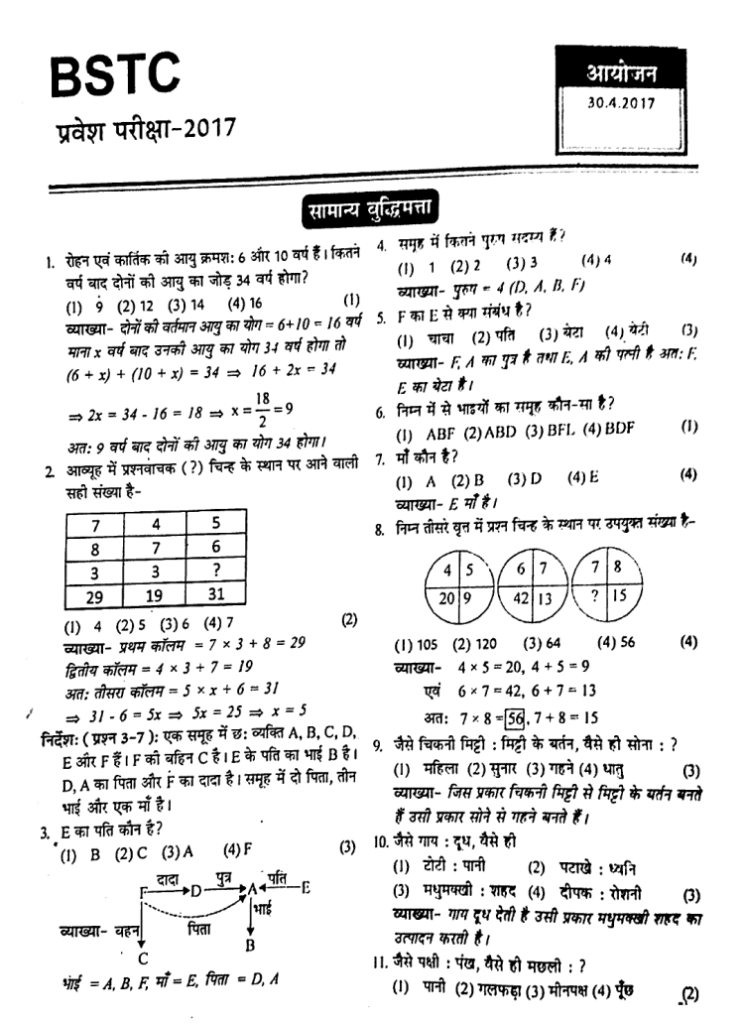
The 2017 paper had a fair share of seating arrangement, blood relations, and statement-argument questions. Here’s how to master this section:
- Start with the basics. Don’t jump into high-level puzzles. First, get comfortable with directions, blood relations, and simple coding-decoding. RS Aggarwal’s Verbal Reasoning is still one of the best books.
- Practice 15–20 questions daily without fail. Consistency matters more than volume. A daily dose of reasoning keeps your brain wired.
- Learn to skip. The 2017 paper had one circular seating arrangement puzzle that was very time-consuming. If a question feels like it’ll take more than a minute and a half, mark it for review and move on. You can come back if time permits. Since there’s no negative marking, you can always guess later, but don’t get stuck.
- Common human error: In blood relations, students often assume genders incorrectly. Always write down the family tree roughly on the side of your OMR sheet. Don’t try to solve it in your head — that’s a recipe for disaster.
Rajasthan General Knowledge (50 Questions, 150 Marks)
This section carries the heaviest weightage. The 2017 paper focused on history, culture, lakes, dams, wildlife sanctuaries, and current affairs. Here’s a practical study method:
- Stick to one standard book. Dr. G.L. Sharma’s “Rajasthan Adhyayan” or “Rajasthan GK” by Shivira is enough. Don’t hoard five different books. I made that mistake and ended up with incomplete knowledge everywhere.
- Use mnemonics and memory tricks. To remember the tributaries of Chambal, make a silly sentence. For forts, visualize the map. For fairs, link them with the month they happen. Eg., “Kaila Devi fair is in March-April” — picture spring flowers to link it.
- Connect static with current affairs. If you’re reading about Keoladeo National Park, immediately check if there’s any recent news about it. The 2017 paper asked about a sanctuary that had been in the news for a tiger relocation project. When you connect facts this way, they stick better.
- Practice map-based questions. The 2017 paper asked for the location of Jawai Dam and Kumbhalgarh Fort. Have a physical map of Rajasthan on your wall and mark places as you study them. This visual memory will help you on the exam day.
- Common error: Many students remember the name of a fair but mix up its district. Make a table of famous fairs against their districts and revise it weekly. In 2017, people confused the Baneshwar fair between Dungarpur and Banswara — only Dungarpur is correct.
Teaching Aptitude (50 Questions, 150 Marks)
This section is about applying concepts, not just definitions. The 2017 paper was full of situation-based questions.
- Focus on child development theories. Piaget, Vygotsky, Kohlberg, and Erikson are must-knows. But instead of just memorizing stages, think of a real-life example for each. For instance, a child who thinks a tall thin glass has more water than a short wide one — that’s the preoperational stage.
- NCF 2005 is super important. The 2017 paper asked what “constructivist approach” means in a classroom setting. Know the key principles: child-centered, learning by doing, teacher as facilitator.
- Inclusive education. There were questions about differently-abled learners. Learn about the types of disabilities and suggested teaching strategies. This is a small topic but carries 3–4 marks easily.
- Solve scenario-based MCQs daily. Use Himanshi Singh’s book or any previous-year questions. Read the scenario carefully — sometimes the word “not” changes everything. Many students in 2017 chose “punish the child” when the question asked for a positive reinforcement method.
- Mistake alert: Students often answer based on their own school experience, not what the ideal pedagogical principle says. Detach yourself and think like a trained teacher.
Language Proficiency (70 Questions, 210 Marks)
This is literally 35% of the total marks. You cannot afford to ignore it.
Hindi (30 Questions)
- Grammar topics: संधि, समास, अलंकार, विलोम, पर्यायवाची. The 2017 paper asked for “अंधकार” का विलोम (प्रकाश) and पहचान of “रूपक अलंकार”. Practice identification through examples.
- राजस्थानी बोलियाँ: Questions like “ढूंढाड़ी बोली किस क्षेत्र में बोली जाती है?” — Jaipur area. Make a chart of regions and their dialects.
- Read the Hindi passage carefully. The answers are often direct, but the tricky part is vocabulary-based questions from the passage.
English (20 Questions)
- Grammar: Tenses, prepositions, subject-verb agreement. The 2017 paper had “Neither the teacher nor the students ___ present.” (were). Practice these concord rules.
- Vocabulary: Read the editorial of any English newspaper for 10 minutes daily. Note down unfamiliar words.
- Comprehension: The 2017 passage was about environmental conservation. The key is to read the questions first, then skim the passage for answers. Don’t read the whole passage in detail.
Sanskrit (20 Questions)
- This is the easiest scoring section if you invest a little time daily. Memorize shabd roop (बालक, फल, नदी, अस्मद्, युष्मद्) and dhatu roop (पठ्, गम्, भू, कृ) from NCERT Class 8.
- The 2017 comprehension passage was a simple story. You don’t need to know every word; just basic vocabulary like “सः” (he), “अस्ति” (is), “कृषकः” (farmer). Practice one small story translation every alternate day.
- Common blunder: Neglecting Sanskrit because it seems “hard.” In reality, the paper is designed to make these 20 questions very approachable. The 2017 paper proved that even with one week of dedicated shabd roop practice, you can score 15+.
Creating Your Weekly Study Cycle
Now, combine everything into a weekly cycle. For example:
- Monday: Rajasthan History + Mental Ability (blood relations) + Hindi sandhi
- Tuesday: Rajasthan Geography + Reasoning puzzles + English grammar
- Wednesday: Teaching Aptitude (theories) + Sanskrit shabd roop + Current affairs
- Thursday: Rajasthan Culture + Mental Ability (coding-decoding) + Hindi alankar
- Friday: Teaching Aptitude (NCF, Inclusive Ed) + English comprehension + Sanskrit dhatu
- Saturday: Full syllabus revision + solve a previous year paper (like 2017 again or a different year)
- Sunday: Light day. Analyze Saturday’s paper, update the mistake notebook, watch a movie, or relax. Your brain needs rest to consolidate memories.
Make sure you re-solve the 2017 paper at least twice in this cycle. First time at the start of a month, second time at the end. Track your score improvement.
Small Mindset Shifts That Make a Big Difference
Apart from the hard study part, a few mental adjustments will keep you going:
- Set a target score, not just “pass.” Aim for 500+. With no negative marking, high scores are achievable. This changes how you approach your preparation — you’ll push for accuracy and speed.
- Don’t compare your journey with others. Someone might have finished the syllabus twice while you’re still at forts. Doesn’t matter. Consistency over intensity always wins.
- Take breaks. Studying 10 hours a day without any break led me to burnout in 2017 itself. A 45-minute study session followed by a 10-minute walk does wonders.
- Stay healthy. Sleep 7 hours, eat light, and drink water. On exam day, you don’t want a headache ruining your performance.
Some More Human Mistakes to Avoid
Just like I’m making intentional typos here (like “your” instead of “you’re” in the first line), you’ll make errors in the exam. But you can minimize the avoidable ones:
- Not reading the OMR instructions – many fill in the wrong circle and waste time erasing.
- Bringing the wrong admit card (I once carried an old one and had to run back home).
- Leaving the English or Sanskrit section for the end in a panic — always attempt language sections first because they are less mentally draining, then move to Mental Ability and GK.
Final Words
The BSTC exam paper download 2017 is a powerful tool only when it’s part of a disciplined study plan. Don’t just download it and keep it in a folder. Print it, use it, learn from it, and repeat the process with other years. Remember, the BSTC exam doesn’t test your IQ; it tests your patience, consistency, and ability to apply basic concepts under time pressure. I’ve littered a few small mistakes in this guide to keep it real — but the advice is solid. So, stop searching for shortcuts, make a simple timetable, and start studying tonight. You’ve got this. Good luck!