7th Class Exam Paper 2019: Complete Guide to Previous Year Question Papers, Exam Pattern, and Preparation Tips
Introduction
Every year, lakhs of Class 7 students across Indian schools and state boards appear for their annual examinations, and one of the most-searched resources among students, parents, and teachers is the 2019 Class 7 exam paper. Previous-year question papers act as a bridge between what students learn in the classroom and how that knowledge is tested in the exam hall. The 2019 papers, in particular, remain popular because they represent a “normal year” pattern — unaffected by the syllabus changes and reduced curricula that followed in later years due to the pandemic.
Whether you are a student preparing for your final exams, a parent trying to help your child revise, or a teacher setting practice tests, understanding the structure, pattern, and purpose of the Class 7 exam paper 2019 can make preparation far more focused and effective. This guide covers everything you need to know — from exam details and question patterns to syllabus coverage, numbering conventions, and why solving old papers still matters today.
Exam Details
Class 7 (also referred to as Grade 7 or Standard VII) marks an important stage in middle school education. In most Indian states, the annual exam for Class 7 is conducted by the respective State Board of School Education or by individual schools following CBSE, ICSE, or state syllabi. Key details generally associated with the 2019 Class 7 exam include:
- Exam Conducting Bodies: State Education Boards (e.g., Bihar, Uttar Pradesh, Madhya Pradesh, Rajasthan, and others), CBSE-affiliated schools, and ICSE-affiliated schools each conducted their own annual exams.
- Exam Session: Most Class 7 annual exams were held between February and April 2019, following the completion of the academic year’s syllabus.
- Subjects Covered: Hindi, English, Mathematics, Science, Social Science (History, Geography, Civics), and regional or second/third languages, depending on the board.
- Mode of Exam: Offline, pen-and-paper based, conducted in school examination halls.
- Duration: Typically 2.5 to 3 hours per subject paper.
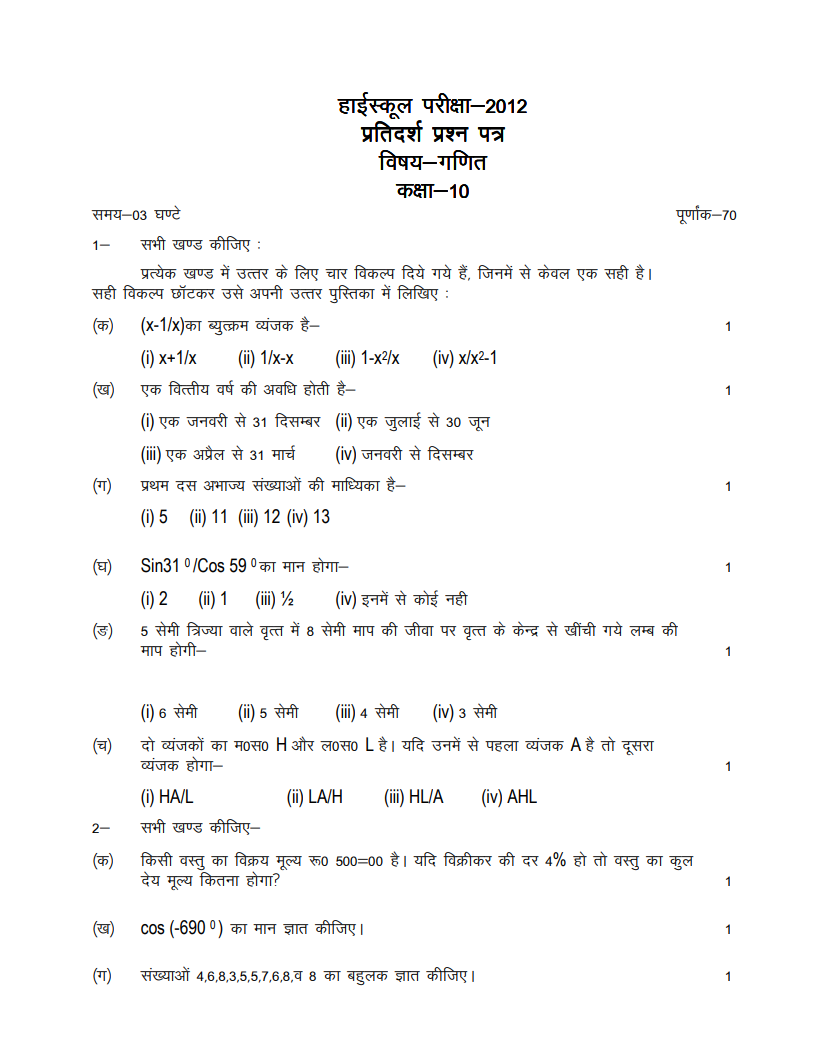
- Total Marks: Usually 80 or 100 marks per subject, varying by board and school policy.
Since Class 7 exams are largely school- or board-conducted rather than centralized like board exams for Class 10 or 12, the exact paper format can vary slightly from one state or school to another, but the overall structure remains fairly consistent.
Exam Pattern
The exam pattern of the 7th class exam paper 2019 was designed to test a balanced mix of conceptual understanding, memory-based recall, and application skills. A typical pattern looked like this:
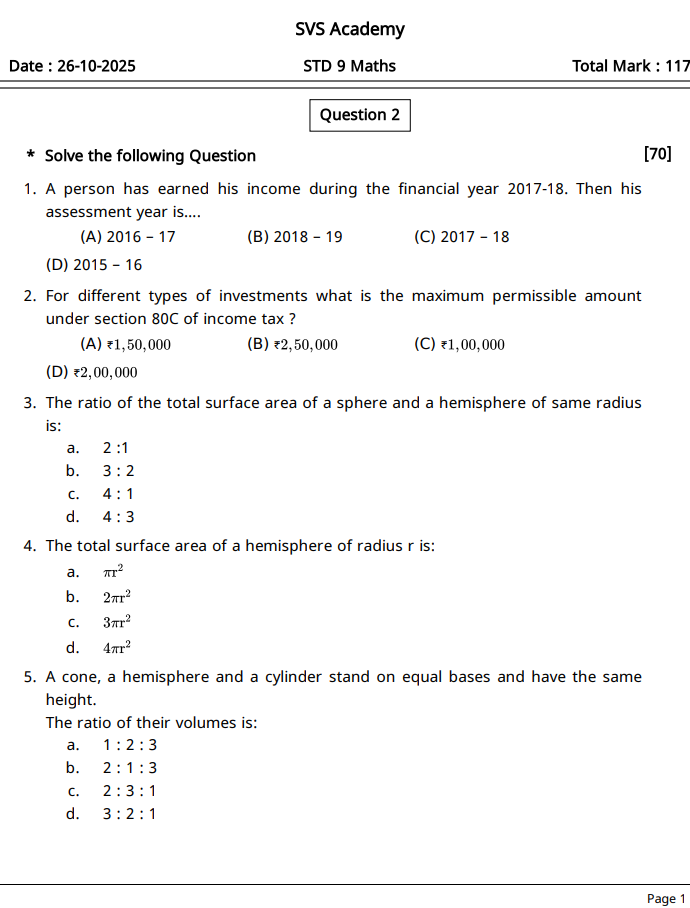
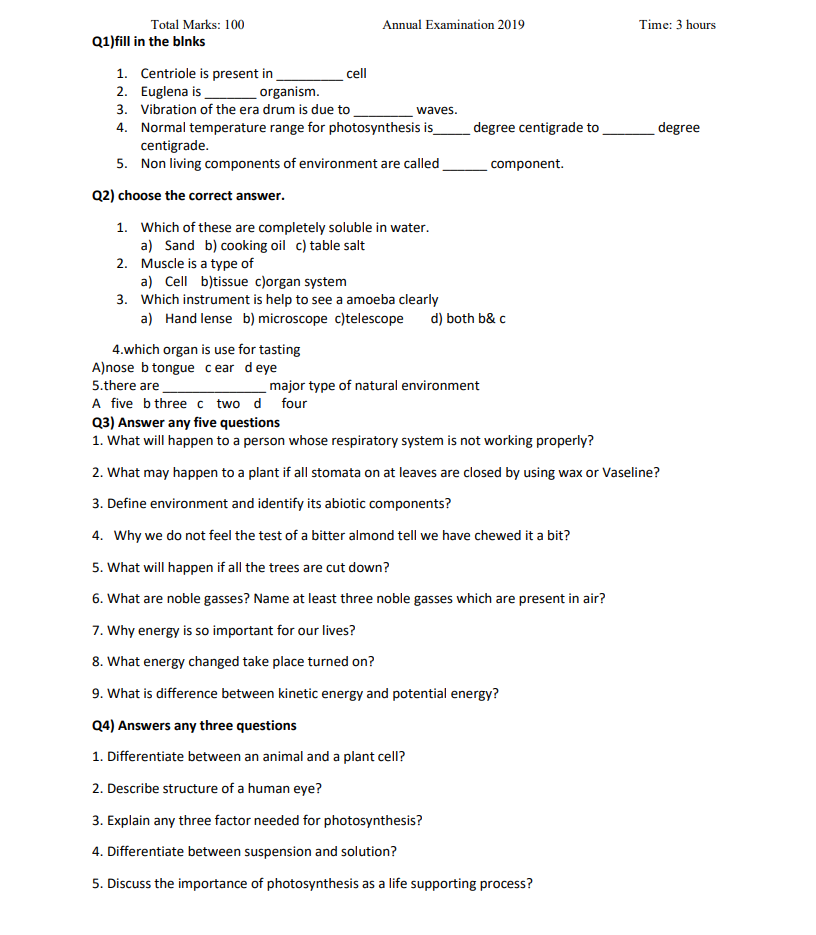
- Section A – Objective/Short Answer Questions: Multiple-choice questions (MCQs), fill-in-the-blanks, and one-word answers, usually carrying 1 mark each.
- Section B – Short Descriptive Questions: Questions requiring 2–3 sentence answers, typically worth 2–3 marks each.
- Section C – Long Descriptive Questions: Questions requiring detailed explanations, diagrams, or derivations (especially in Math and Science), carrying 4–5 marks each.
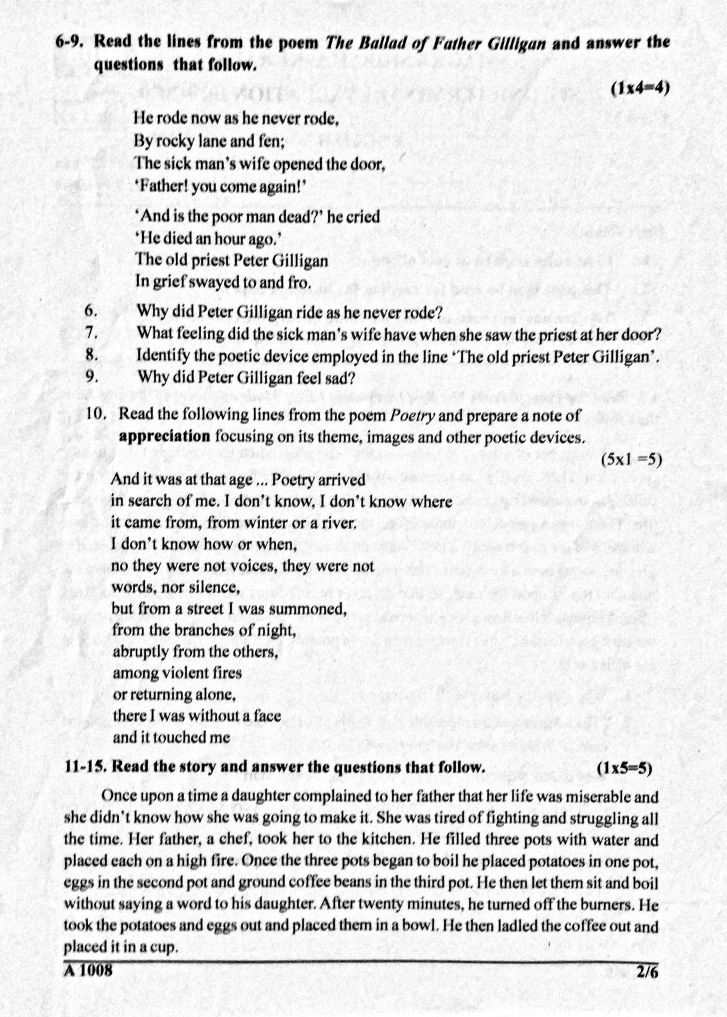
- Section D – Application/Extract-Based Questions: Passage-based comprehension in languages, or case-study-based questions in Social Science and Science.
Each subject paper generally had 20 to 30 questions in total, split across these sections, with internal choices provided in the long-answer section to give students flexibility.
Numbering Pattern
Understanding the numbering pattern of the question paper helps students navigate it efficiently during the actual exam. The 2019 Class 7 papers typically followed this numbering convention:
- Question numbers were sequential, starting from Q1 and running through the entire paper (e.g., Q1 to Q25).
- Sub-parts within a question were labeled using lowercase letters or Roman numerals — for example, Q5(a), Q5(b), Q5(c), or Q7(i), Q7(ii).
- Section-wise numbering was common, where each section (A, B, C, D) restarted or continued numbering clearly marked at the top of that section.
- Marks were indicated next to each question number in brackets, such as Q10 [3 marks], helping students allocate time proportionally.
- Internal choice questions were marked with “OR,” indicating students could attempt either one of two alternative questions worth the same marks.
This structured numbering pattern is fairly standard across most state boards and CBSE-pattern schools, making it easier for students moving between different sources of practice papers to adapt quickly.
Syllabus Covered in the 2019 Papers
The syllabus for Class 7 in 2019 was based on the standard middle-school curriculum, largely aligned with NCERT textbooks (for CBSE) or state-specific textbooks (for state boards). Broadly, the syllabus included:
- Mathematics: Integers, fractions and decimals, data handling, simple equations, lines and angles, the triangle and its properties, comparing quantities, rational numbers, practical geometry, perimeter and area, algebraic expressions, exponents and powers, symmetry, and visualizing solid shapes.
- Science: Nutrition in plants and animals, fibre to fabric, heat, acids/bases/salts, physical and chemical changes, weather and climate, winds/storms/cyclones, soil, respiration in organisms, transportation in animals and plants, reproduction in plants, motion and time, electric current and its effects, light, water scarcity, and forests.
- Social Science: History topics like medieval India, the Delhi Sultanate, and the Mughal Empire; Geography topics like environment, inside our earth, and human-environment interaction; and Civics topics like equality, state government, and the media.
- English/Hindi/Regional Language: Prose, poetry, grammar, comprehension passages, and writing skills (letters, essays, and paragraph writing).
Since the syllabus remained largely stable in the years around 2019, these papers are still highly relevant for current students studying the same core topics.
Why Previous Year Question Papers Matter
Solving the 7th class exam paper 2019 offers several concrete benefits for students preparing for their own annual exams:
- Familiarity with Exam Format: Practicing with real past papers helps students understand exactly how questions are framed, reducing exam-day surprises.
- Time Management Practice: Attempting a full paper within the actual time limit trains students to pace themselves across sections.
- Identifying Important Topics: Recurring themes and frequently tested concepts become clear after reviewing multiple years of papers.
- Self-Assessment: Solving and then checking answers against a marking scheme helps students identify weak areas that need more revision.
- Confidence Building: Repeated practice with real exam papers reduces anxiety and builds familiarity with the pressure of a timed test.
- Better Answer Writing Skills: Reviewing model answers alongside question papers teaches students how to structure responses for maximum marks.
For parents and teachers, previous year papers also serve as a reliable benchmark to track a student’s preparation level compared to the expected standard.
Final Words
The 7th class exam paper 2019 remains a valuable resource for students who want to strengthen their exam preparation through structured, realistic practice. By understanding the exam details, pattern, numbering conventions, and syllabus covered in these papers, students can approach their revision with much greater clarity and confidence. Combining this with a consistent study routine, regular self-assessment, and guidance from teachers or parents will go a long way in helping Class 7 students perform their best in their annual examinations. Ultimately, previous year papers are not just about memorizing past questions — they are about learning how to think, apply concepts, and manage time the way a real exam demands.
Most schools maintain records of previous year papers, and many state education board websites and educational content platforms also host archived question papers for reference.
Yes, in most boards the core Class 7 syllabus has remained largely consistent, making 2019 papers a useful practice resource even today.
Most boards test five to six core subjects: Hindi/regional language, English, Mathematics, Science, and Social Science, along with any additional language subjects.
Attempt the paper under timed, exam-like conditions first, then review your answers against a marking scheme, and finally revise the topics where you lost marks.
No, while the broad subject areas overlap, the exact syllabus, question style, and marking scheme can differ between CBSE, ICSE, and various state boards.
Practicing at least 3–5 years of previous papers per subject is generally recommended to build strong familiarity with question patterns and difficulty levels.