Hindi UP Board Paper 2018 Class 10: Full Study Guide, Exam Pattern, Syllabus & Preparation Tips
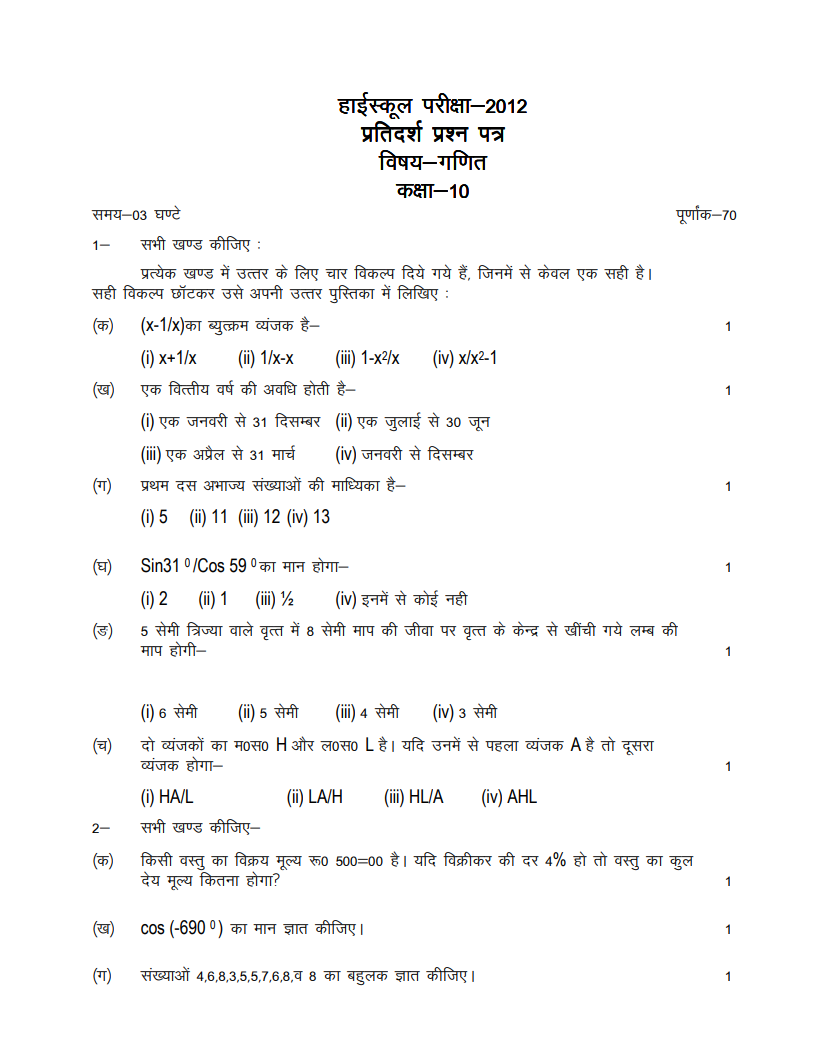
Are you a UP Board Class 10 student? Has your teacher asked you to solve the Hindi UP Board paper 2018 Class 10? If so, you’re not alone. In fact, it’s good advice. The UP Board (UPMSP) often repeats its question style year after year. So an older paper like this one still tells you a lot.
However, staring at an old paper without a plan can feel confusing. What should you actually do with it? How do you turn it into real marks?
This guide answers those questions. We’ll cover the exam pattern, syllabus, marking scheme, and study timetable. We’ll also show you exactly where to focus. Follow this guide, and Hindi can become one of your highest-scoring subjects.
Why Practise the Hindi UP Board Paper 2018 Class 10?
Many students underestimate Hindi. They think, “It’s my mother tongue, I’ll manage.” But this mindset causes trouble. Students often lose easy marks in grammar rules they never revised. They also lose marks in essays that ramble without structure.
The good news? The UP Board Hindi paper follows a fairly consistent format each year. So working through the 2018 paper gives you a real feel for the exam. You’ll understand the question style. You’ll also feel the time pressure. And you’ll learn what short, precise answers examiners actually reward.
Think of this paper as a free mock test. After all, it was designed by the same board that will set your real exam.
Hindi UP Board Paper 2018 Class 10: Exam Overview
The Hindi paper for UP Board Class 10 carries 100 total marks. It’s usually a three-hour written exam. Unlike Science, Hindi has no practical component. That’s good news, because every mark comes from preparation and clear writing.
The paper is split into sections, called khand. Each section tests a different skill:
- Gadya Khand (Prose): Questions from prose chapters, plus an unseen passage (apathit gadyansh).
- Kavya Khand (Poetry): Questions from poems in the syllabus, plus an unseen poem (apathit padyansh).
- Vyakaran (Grammar): Sandhi, samas, alankar, ras, chhand, muhavare, paryayvachi, and vilom shabd.
- Rachna (Composition): Letter writing (patra lekhan) and essay writing (nibandh lekhan).
Keep one thing in mind: mark distribution can shift each year slightly. So always check the latest UPMSP model paper too. Use the 2018 paper for practice. Use the current year’s paper for exact weightage.
How Is the Hindi UP Board Paper 2018 Class 10 Marked?
UP Board examiners judge your answers on both content and presentation. Here’s what actually matters:
- Be precise, not lengthy. A tight, correct answer beats a long, rambling one.
- Write neatly. Clear handwriting and numbered answers help examiners mark faster and fairer.
- Show your steps. In grammar questions like sandhi-vichchhed, you often get partial marks for using the right method.
- Follow the format. Letters need the correct structure. So do essays. Skip the format, and you lose marks, even with good content.
- Don’t rely on moderation. Yes, boards apply some grace marking. But aim to earn every mark yourself.
Hindi Syllabus: What to Actually Study
Don’t try to read everything at once. Instead, break the syllabus into these focus areas:
- Prose and poetry chapters: Learn the summary, theme, and characters. Also learn a short introduction (jeevan parichay) of each poet or writer.
- Unseen passages and poems: You can’t memorise these. So practise a new one every few days.
- Grammar topics: This is the most scoring section, because answers are predictable. Master sandhi, samas, ras, alankar, and chhand.
- Letter formats: Practise both formal letters (to a principal or editor) and informal letters (to a friend or relative).
- Essay writing: Prepare 10 to 12 essays in advance. Cover topics like festivals, environment, and social issues.
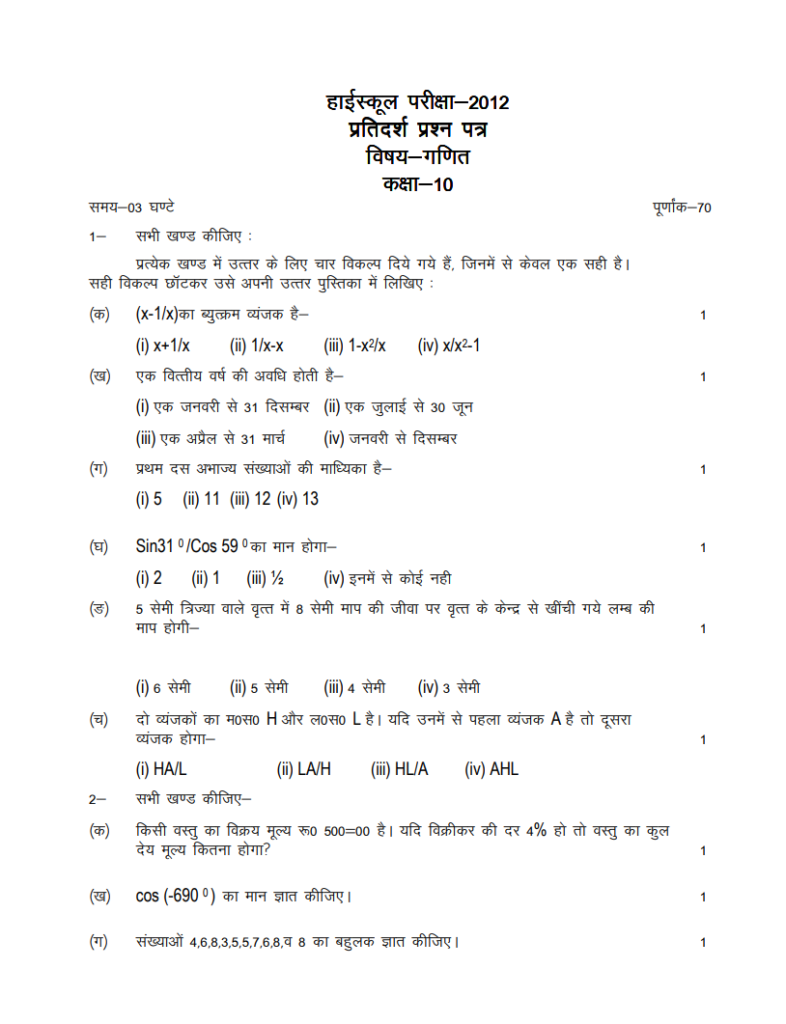
How to Build a Study Timetable
A timetable only works if it’s realistic. Don’t plan eight hours of nonstop Hindi study. Instead, break your time into small, specific blocks. Here’s a simple two-week plan you can adapt.
Week 1: Build the Base
- Days 1-2: Read all prose chapters. Note the theme and author details.
- Days 3-4: Read all poetry chapters. Note the poet and central idea.
- Days 5-6: Study grammar, one topic a day, with 15-20 practice questions.
- Day 7: Revise your notes. Then attempt one unseen passage and one unseen poem.
Week 2: Practice and Speed
- Days 8-9: Practise muhavare, paryayvachi, and vilom shabd daily.
- Day 10: Write three formal and three informal letters, against the clock.
- Day 11: Write three essays under timed, exam-like conditions.
- Day 12: Solve the full Hindi UP Board paper 2018 Class 10 in one sitting. Time yourself for three hours.
- Day 13: Check your answers. Use a marking scheme, or ask your teacher.
- Day 14: Revise your weak areas. Finish with a light, final revision.
Repeat this cycle. Each time, tighten your timing. Soon, the paper will feel familiar, not intimidating.
Where to Focus for Maximum Marks
If your time is limited, focus in this order:
- Grammar (Vyakaran): This gives the highest return per hour. Answers are fixed and predictable.
- Comprehension: Unseen passages and poems test a skill, not memory. So practise daily.
- Letters and essays: Format matters as much as content. Drill the structure until it’s automatic.
- Textbook prose and poetry: Focus on themes and messages, not word-for-word memorisation.
A Few Honest Tips
- Solve the paper, don’t just read it. Reading feels easy. Writing reveals your real gaps.
- Keep a small notebook. Write down the muhavare, paryayvachi, and vilom shabd you keep forgetting. Revise it for five minutes each night.
- Practise your writing speed. Many students know the answers, but they run out of time because they write too slowly.
- Take Hindi seriously. Students who score 90+ treat Hindi like Maths or Science, not an afterthought.
Final Thoughts
The Hindi UP Board paper 2018 Class 10 isn’t just an old exam sitting in a PDF. It’s a genuine map of how the board thinks and tests. So use it well.
Combine it with a steady timetable. Prioritise grammar and writing skills. And revise consistently, not in one big rush before the exam. Do this, and Hindi will stop feeling like a subject to survive. Instead, it’ll become one of your easiest sources of guaranteed marks.