Agriculture Supervisor Paper 2018: A Complete Study Guide
If you’ve typed “agriculture supervisor paper 2018” into a search bar, you already know the feeling — dozens of tabs open, half-finished PDFs, and that nagging question of where to actually begin. So let’s slow down and go through this properly, one piece at a time, the way a senior would walk a junior through it rather than just dumping information on you.
Introduction to the Exam
The RSMSSB Agriculture Supervisor exam — everyone just calls it Krishi Paryavekshak — is conducted by the Rajasthan Subordinate and Ministerial Services Selection Board on behalf of the state’s Department of Agriculture. The 2018 recruitment cycle opened applications in July of that year, and like every cycle before and since, it pulled in a massive number of applicants chasing a relatively small number of posts.
It’s worth understanding why this post is so popular in the first place. An Agriculture Supervisor works directly with farmers on the ground — advising on crop practices, government schemes, soil health, and irrigation — which makes it a meaningful, respected role for anyone with an agricultural background. But that popularity also means competition is fierce, and clearing this exam takes more than casual studying. It takes a real plan.
Even though we’re talking about the 2018 paper specifically, most of what follows applies to any recent cycle of this exam, since RSMSSB tends to keep its core pattern fairly consistent over the years, with only small tweaks here and there.
Syllabus of the Exam
The syllabus looks intimidating as one long list, but it settles down once you split it into five natural chunks. Here’s the whole thing laid out so you can see it at a glance instead of hunting through paragraphs:
| Section | Key Topics Covered |
| General Hindi | Synonyms, antonyms, one-word substitutions, sentence correction, translation, grammar |
| Rajasthan GK, History & Culture | State geography, major dynasties, freedom movement, fairs & festivals, folk art, architecture, current affairs |
| Core Agriculture | Agronomy of field crops, soil science & management, irrigation & weed management, plant pathology, agricultural entomology, farm machinery, seed production, dry farming |
| Horticulture | Fruit & vegetable cultivation, nursery management, plantation crops, post-harvest handling |
| Animal Husbandry | Livestock management basics, dairy science, poultry, practical veterinary first-aid |
Now let’s talk through what each of these actually means in practice, because a table only gets you so far.
General Hindi is grammar-heavy — nothing unusual here, and it rewards steady daily practice far more than last-minute cramming.
Rajasthan GK, History and Culture is the second chunk, and it’s a big one. This section punishes people who leave it for the final week, because there’s simply too much ground to cover quickly.
Then comes the real core of the paper — core Agriculture subjects. This is where most of your marks live, and where most of your study hours should go too.
Horticulture sits right alongside it, and it’s smaller but still worth solid attention.
And finally, Animal Husbandry — enough practical knowledge to actually be useful to a farming community, which is really the point of this job in the first place.
Exam Pattern
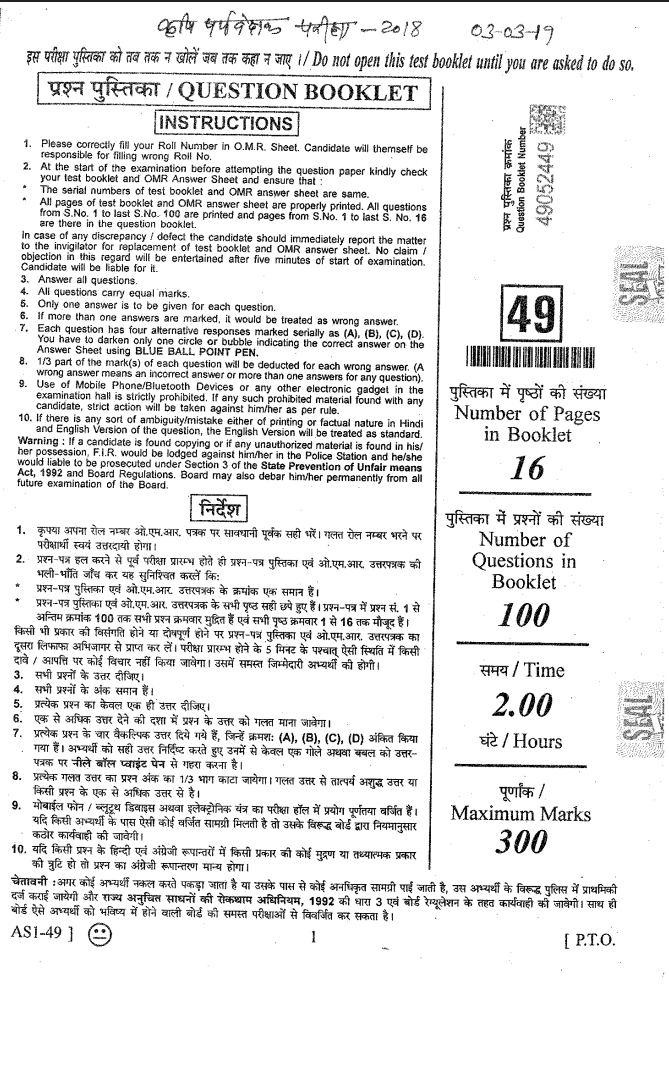
The exam itself is a single-sitting, objective-type paper — pure MCQs, no subjective writing involved. It’s divided across those same broad sections we just talked about, and here’s roughly how the marks break down based on the 2018 pattern:
| Section | Approximate Marks |
| General Hindi | 60 |
| Rajasthan GK, History & Culture | 100 |
| Horticulture, Animal Husbandry & Core Agriculture | 240 |
| Total | 400 |
| Question Type | Objective (MCQ) |
| Negative Marking | 1/3 mark per wrong answer |
Each question generally carries equal weight, and here’s the detail people forget until it costs them — that negative marking column. It should shape your entire approach on exam day. Blind guessing on a question you genuinely don’t know will hurt your score more than simply skipping it. This isn’t an exam where bluffing pays off.
One honest note here — don’t take any table you find online as gospel, including this one. Go pull the actual official notification for whichever cycle you’re appearing in and confirm the marks distribution yourself. RSMSSB adjusts things slightly across years, and a five-minute check now can save you a nasty surprise later.
Best Books for Exam Preparation
Here’s a mistake I see constantly — people buy five or six books covering the exact same syllabus, thinking more material automatically means better preparation. Mostly it just means confusion and a shelf full of half-read books.
Here’s how I’d break down what you actually need, in the order you should buy it:
| Book Type | What It’s For | Priority |
| Combined Krishi Paryavekshak guide | Covers Rajasthan GK, Agriculture, Horticulture & Animal Husbandry together | Buy first |
| Subject-specific book | Deep dive into whichever area feels weakest for you personally | Buy after finishing the combined guide |
| Rajasthan GK book (latest edition) | History, culture & current affairs, updated for the current year | Essential |
| Competitive-exam Hindi grammar book | Grammar practice built for exams, not school-level content | Essential |
| MCQ question bank with previous papers | Practice questions + previous year paper compilation | Just as important as the guide itself |
Start with that combined guide first — several publishers put these together specifically for the RSMSSB pattern. Once you’ve gone through it fully, add the subject-specific book, the updated GK book, and the Hindi grammar book. Don’t skip the question bank with previous papers in it, though — that last one matters more than almost anything else on this list, and we’ll get into exactly why next.
Why Previous Year Question Papers Are So Important
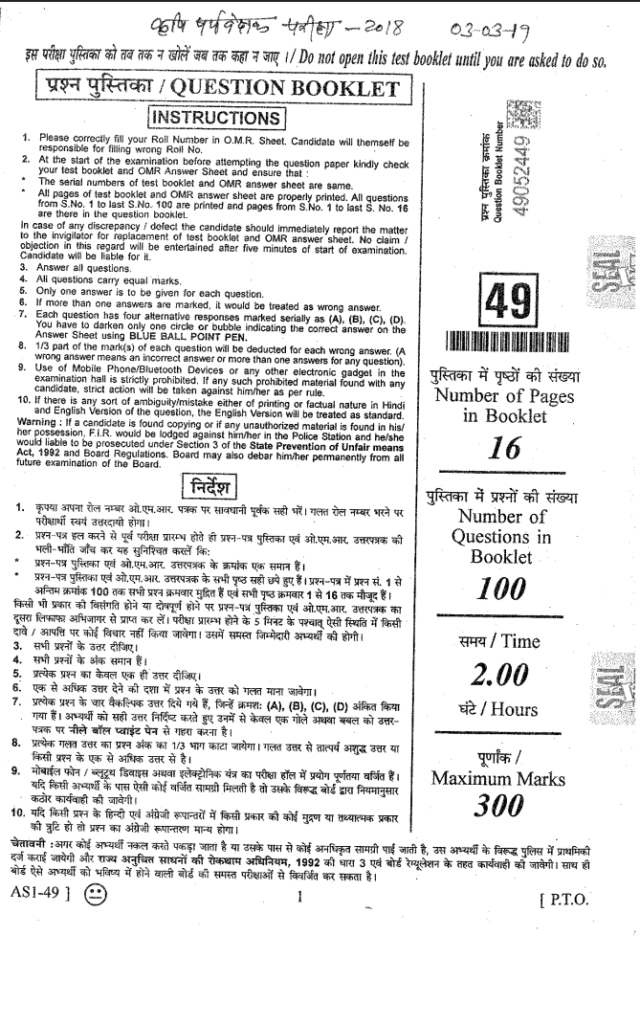
If there’s one habit that separates people who clear this exam from people who don’t, it’s this — they take previous year papers seriously, and the 2018 paper in particular is a genuinely good place to start.
Solving it does something no textbook chapter can replicate. It shows you exactly how RSMSSB phrases its questions, which is often surprisingly different from how the same concept reads in a textbook. Over time, it also reveals which topics keep getting tested year after year, which means you stop treating every chapter as equally important and start prioritizing based on actual evidence instead of guesswork. And maybe most importantly, it trains you for the pressure of exam day itself — the negative marking hanging over every uncertain answer, the ticking clock, and the mental fatigue that creeps in somewhere around question ninety of a two-hour paper.
Try to solve at least one full previous paper a week once your basic syllabus coverage is done. And don’t just check your score and move on — sit with the questions you got wrong and actually understand why. That’s where the real learning happens, far more than in the questions you got right on the first try.
How to Create a Study Timetable
Forget the idea of studying sixteen hours a day. That plan lasts about four days before burnout sets in and the whole thing falls apart. What actually works is a schedule modest enough that you can repeat it, week after week, for months on end.
Mornings, when your mind is at its sharpest, are best spent on the core Agriculture subjects — Agronomy, Soil Science, Crop Protection. Give this two to three focused hours if you can manage it. Afternoons can handle Horticulture and Animal Husbandry, alternating between the two on different days so you’re not overloading on a single topic. Evenings work well for Rajasthan GK and current affairs — lighter, more memory-based content that doesn’t demand peak concentration. And before winding down for the night, spend thirty to forty-five minutes on Hindi practice along with a quick recap of everything you covered earlier in the day.
Once a week, block out enough time to sit through a complete previous year paper or mock test under real timed conditions, then spend just as long reviewing your mistakes afterward. As your exam date approaches, flip the ratio entirely — spend your final month mostly on revision and mock papers rather than chasing new topics you haven’t touched yet.
Where to Focus Your Study
Not everyone needs to study every section with equal intensity, and your background should genuinely shape your plan.
If you come from an agriculture or horticulture academic background — a B.Sc. Agriculture degree, a diploma, something along those lines — you already have a head start on the core Agriculture, Horticulture, and Animal Husbandry sections. Don’t waste that advantage by over-studying what you already know well. Push most of your effort into Rajasthan GK and Hindi instead, since those are probably less familiar territory for you.
If you’re coming from a general or arts background, it’s the opposite. Your Hindi and GK are likely already reasonably strong, but you’ll need real, deliberate hours on Agronomy, Soil Science, and Crop Protection — subjects that don’t come naturally without formal study.
Regardless of where you’re starting from, treat Rajasthan GK and current affairs as a daily five-to-ten-minute habit rather than a subject you sit down and “finish” once. It’s the section most likely to shift between exam cycles, and small daily exposure beats occasional deep dives here.
Final Thoughts
Preparing for an exam like this is never a straight line upward. Some days the concepts click immediately, and other days nothing makes sense no matter how many times you read it. That’s not a sign you’re falling behind — it’s simply what studying for months on end feels like for almost everyone who’s ever done it. What actually matters is showing up the next day anyway, sticking to your timetable even on the days you don’t feel like it, and trusting that the effort adds up over time. Thousands of people who once felt exactly as uncertain as you do right now are Agriculture Supervisors today. With a clear syllabus, the right two or three books instead of ten, honest and regular practice with previous papers, and a routine you can actually sustain, you’re already further ahead than most people ever get. Study steadily. Not just hard.